

What if eating your veggies earned you points? Or drinking enough water unlocked a reward? In 2025, that’s not science fiction — it’s called nutrition gamification, and it’s turning the way we eat into something surprisingly fun.
Thanks to technology and behavior-based tools, healthy eating has evolved beyond food pyramids and boring tracking. Instead, it’s becoming a challenge-based experience where consistency, small wins, and friendly competition drive real progress.
1_What Is Nutrition Gamification?
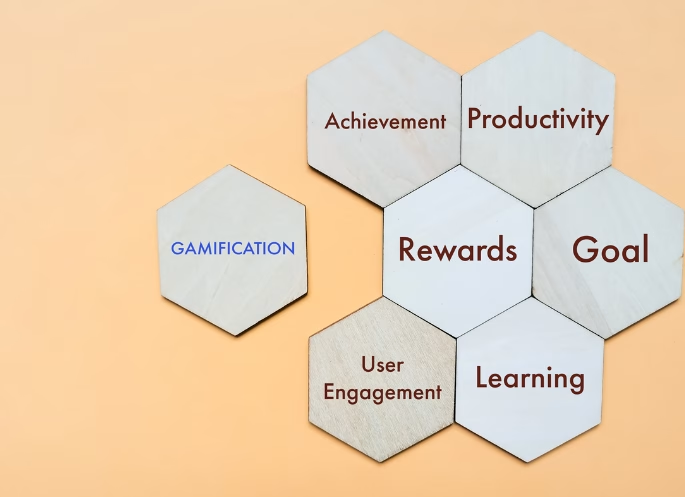
Gamification is the use of game-like elements — points, levels, badges, or streaks — in non-game activities. When applied to nutrition, it transforms everyday habits like drinking water, eating vegetables, or skipping sugar into interactive goals and rewards.
The result? Eating well no longer feels like a chore. It feels like progress, and progress feels good.
2_How Does It Work?
Gamification in nutrition typically includes features like:
Points for completing daily food goals
Streaks for consistency over days or weeks
Badges for milestones like “Meatless Monday” or “No Sugar Week”
Progress bars or levels showing how far you’ve come
Challenges or leaderboards to compare progress with friends or family
These mechanics tap into our natural desire to improve, achieve, and compete — without feeling forced.
3_ What Does the Research Say?
User Preferences and Personalization
Personalized gamification is transforming the way we use nutrition apps. In a recent study where 308 people were surveyed, the most preferred gamification elements were goals, progress bars, and reward coupons. These features not only make the apps more enjoyable but also encourage long-term healthy eating habits.
The takeaway? Nutrition apps that match your personality and motivation style are more likely to keep you engaged and help you reach your dietary goals. For example, if you’re someone who enjoys tracking progress or completing tasks, features like progress bars and daily goals may be especially effective. If you respond well to external rewards, digital coupons could be the right push.
Youth Nutrition and Education
Gamification shows promising results in improving children’s and adolescents’ nutrition knowledge and healthy eating habits. In a meta-analysis of 23 randomized controlled trials, interventions led to increased fruit and vegetable consumption and significantly higher nutritional knowledge scores. While no major changes in body weight were observed, these findings show that gamified education can effectively teach healthier eating behaviors early on helping prevent future chronic diseases.
Gamified Grocery Shopping
Moreover, Gamification can significantly improve the nutritional quality of online food purchases. In a study involving 1,228 participants, those who shopped with gamified nutrition labels—represented by crown icons and a scoreboard—chose significantly healthier foods. On a limited budget, participants exposed to gamification collected more nutrition crowns on average than those without it. Budget differences alone had minimal impact. These findings suggest that adding game-like features to online grocery platforms may help guide shoppers toward better food choices, regardless of their spending.
4_ Nutrition Gamification benefits
Beyond the fun, gamifying nutrition leads to real changes in behavior:
Better habit formation: Repetition + reward = long-term change
Increased awareness: You pay attention to what you eat and how it affects you
Positive reinforcement: Progress is visual, immediate, and encouraging
Higher consistency: People are more likely to stick with it, even after setbacks
By focusing on small wins, people avoid burnout and build healthier routines that last.
5_Is Nutrition Gamification Right for You?
Gamification works best for people who:
- Struggle with consistency but respond well to small, visible wins
- Are motivated by competition, achievement, or social accountability
- Find traditional calorie counting or rigid meal planning tedious and unsustainable
- Want to build healthier habits gradually rather than overhaul everything at once
It’s less effective for people who find external reward systems patronizing, or who are already highly intrinsically motivated. Like any behavioral tool, fit matters but the research suggests it works well for a broad majority of people.
6_ Frequently Asked Questions
What is nutrition gamification? Nutrition gamification applies game mechanics points, streaks, badges, and challenges to healthy eating behaviors to make sustained behavior change more engaging and achievable over the long term.
Does nutrition gamification actually work? Yes. Multiple peer-reviewed studies, including a meta-analysis of 23 randomized controlled trials, confirm that gamified nutrition interventions improve food choices, nutritional knowledge, and consistency in both adults and children.
What are the best nutrition gamification apps? Apps that incorporate strong gamification elements include Habitica, Noom, and MyFitnessPal, as well as grocery retailer platforms with loyalty-based health incentives. Look for apps offering personalized goals, streaks, and progress tracking rather than generic point systems.
Can gamification replace a registered dietitian? No. Nutrition gamification is a behavioral tool, not a substitute for professional nutrition guidance or medical nutrition therapy. It works best as a complement to not a replacement for qualified professional advice.
Is nutrition gamification effective for children? Research strongly supports its use in youth nutrition education. A meta-analysis of 23 randomized controlled trials found that gamified interventions increased fruit and vegetable consumption and significantly improved nutrition knowledge scores in children and adolescents.
7_The Bottom Line
Healthy eating doesn’t fail because people don’t know vegetables are good for them. It fails because knowing and doing are two entirely different problems.
Nutrition gamification attacks the doing problem directly — by making consistency rewarding, progress visible, and the process genuinely worth showing up for. Whether you’re working toward more whole foods, cutting back on sugar, or simply trying to drink more water each day, gamification turns your daily choices into a system with feedback, momentum, and reward built in.
And in this game, the prize is your health.
Discover more from NutriTechDynamics | Smart Home & Supplement Reviews You Can Trust
Subscribe to get the latest posts sent to your email.


