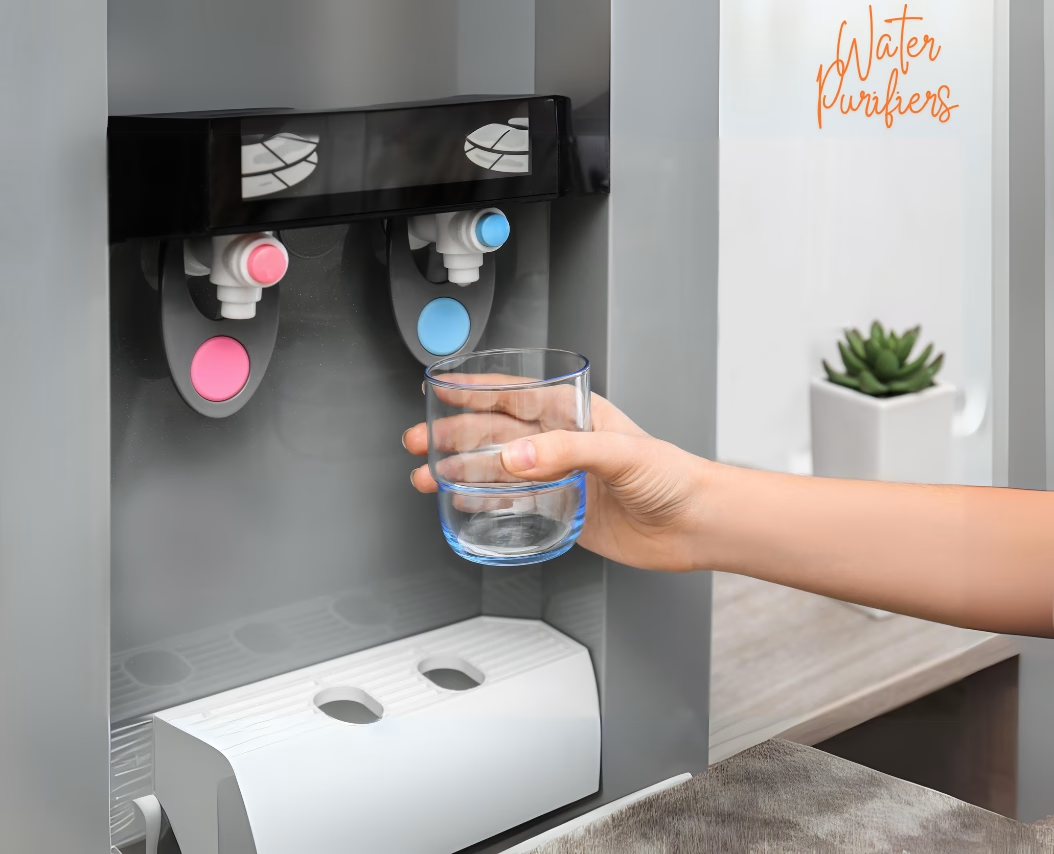
Access to clean and safe drinking water is essential for maintaining good health, but with the increasing pollution levels, even tap water is not always safe to consume. Investing in a high-quality water purifier has become a necessity for every household. In 2025, advancements in water purification and filtration technology have made it easier to ensure that the water you drink is pure and free from harmful contaminants.
1_Why Clean Drinking Water Matters?
Most people know that you can’t survive without water. But the truth is slightly more nuanced. You need more than just water – you need SAFE water. Here’s why:

Every day, over 1000 children under 5 die from diseases linked to unsafe water, sanitation and hygiene, which also kills 1.4 million people every year. [1]
Around 1 million people are estimated to die each year from diarrhoea as a result of unsafe drinking-water, sanitation and hand hygiene. [2]
2.2 billion people globally lack access to safely managed drinking water, highlighting a significant public health challenge.[3]
2_Water Quality: What Contaminants Are in Water?
Water can be contaminated in several ways. It can contain microorganisms like bacteria and parasites that get in the water from human or animal fecal matter. It can contain chemicals from industrial waste or from spraying crops. Nitrates used in fertilizers can enter the water with runoff from the land. Various minerals such as lead or mercury can enter the water supply, sometimes from natural deposits underground, or more often from improper disposal of pollutants. Lead can leach into drinking water through old lead pipes. [4]

3_What Is a Water purification / Filtration?
Water purification and filtration are processes used to make water safe and clean by removing impurities and contaminants.
Water Filtration:
Involves using physical barriers, such as filters, to remove particles, sediments, and some contaminants from water. Common methods include activated carbon filters and sediment filters.
Water Purification:
Goes beyond filtration to eliminate a broader range of impurities, including microorganisms, chemicals, and dissolved solids. This can involve advanced methods like reverse osmosis, ultraviolet (UV) light, and distillation.
Both processes are crucial for ensuring that water is safe for drinking, cooking, and other uses, and they are often used together in multi-stage systems to provide comprehensive water treatment.
4_Water Purification vs. Filtration
It’s important to note that purification and filtration are not the same thing.
A water filter will attract contaminants through a process known as adsorption to catch them and prevent them from continuing into the water you’d drink and use. Water purifiers catch contaminants much like a filter, but they also destroy the contaminants as well. While purifiers are superior in contaminant removal, a downside is that they often remove everything from the water including beneficial minerals that are good for your health including calcium, magnesium, and potassium. A lack of minerals can affect the taste of your water, and many people think purified, and therefore demineralized, water tastes “flat” by comparison.
5_Filtration vs. Purification Water? Which is Better for Your Water?
If safety is your top priority, a water purifier is usually the better choice. However, for improving taste and removing basic impurities, a water filter might be all you need.
On the other hand, you can opt for a water purifier with remineralization technology that re-adds healthy minerals back into water after it has been purified. This is commonly found in certain advanced water purifiers, especially those using reverse osmosis (RO) systems, which tend to remove not only contaminants but also beneficial minerals like calcium and magnesium.

6_Purification Water Methods
When it comes to ensuring the safety and quality of your drinking water, choosing the right purification method is crucial. Various types of water purifiers are available, each designed to address specific contaminants and meet different needs. Here’s an overview of the most common types of water Purification and how they work:
6.1_Reverse Osmosis
Reverse osmosis is the most commonly known method of water purification. Reverse osmosis systems work by pushing highly pressurized water through a semi-permeable membrane. The semi-permeable membrane acts like a screen, as harmful contaminants are left behind while clean water passes through. This process is highly effective at contaminant removal, but also tends to remove the healthy minerals from your water as well.

6.1.1_How Water Reverse Osmosis Work
Reverse Osmosis (RO) purifies water by forcing it through a semi-permeable membrane under high pressure. The membrane blocks contaminants like dissolved salts and heavy metals while allowing clean water to pass through. The filtered water is then stored for use, ensuring a high level of purity and safety. To know more, watch the video below.
6.2_Ultraviolet
Ultraviolet water purifiers use UV light to kill microorganisms in water including bacteria, viruses, parasites, and cysts. UV light pierces the cell walls of microorganisms, either killing them or damaging their DNA so they can’t reproduce (known as inactivation). The dead microorganisms remain in the water but are rendered completely harmless.
However, ultraviolet purifiers can only kill microorganisms, they won’t help with other contaminants such as chlorine, fluoride, or inorganic materials like metals including lead. To remove those contaminants, you’d need to pair a UV water purifier with another system. [6]
6.3_Distillation

Distillation is a type of water purification that separates contaminants from the water through boiling. When water is boiled, clean water evaporates into steam while the contaminant particles are left behind. Water purifiers that use distillation collect the clean steam, which is later condensed back into liquid water for drinking and other purposes.
While distillation removes minerals, microorganisms, and chemicals with a high boiling point, they do not remove volatile organic compounds. Volatile organic compounds are chemicals that can easily become vapors or gases and may not be removed during the distillation process because they can evaporate and condense along with the water. As such, distillation systems may require additional filtration before use. [7]
7_Water Filtration Methods
Various filtration methods address different types of contaminants, from sediments and chemicals to microorganisms. Each method has its own strengths and is suited to specific water quality issues. Here’s an overview of the most common types of water Filtration and how they work:
7.1_Ultrafiltration Water System

Ultrafiltration (UF) systems use a special membrane to filter water, removing particles, bacteria, viruses, and protozoa. The membrane’s tiny pores let water and minerals pass through but block larger contaminants.
UF systems work by pushing water through the membrane, which filters out unwanted substances while keeping helpful minerals like calcium and magnesium. They are energy-efficient and improve water safety by removing microorganisms.
However, UF systems do not remove dissolved salts, heavy metals, or chemicals like chlorine and fluoride. To handle these contaminants, UF is often combined with other filtration methods.
Regular maintenance is needed to keep the system working effectively.
7.2_Sediment water filtration
Sediment water filtration is a method designed to remove larger particles from water, such as sand, dirt, and rust. This process uses filters with various mesh sizes or materials to trap and collect these sediments, preventing them from reaching faucets and appliances. Sediment filters help protect your plumbing and extend the lifespan of other filtration systems by removing debris that could cause clogging or damage. [8]
7.3_Activated Carbon Water Filtration
This process involves passing water through a filter containing activated carbon, which is highly porous and has a large surface area. Activated carbon effectively removes chlorine, odors, and organic chemicals by adsorption where impurities adhere to the carbon surface. This method enhances taste and removes unwanted contaminants, making it a popular choice for both residential and commercial water filtration systems.
8_Health benefits of Clean Drinking Water
Throughout the world, people recognize the importance of access to freshwater. In regions where clean water is scarce, dehydration poses a significant public health concern.
Essential Cell Functions Water plays a crucial role in maintaining cell shape and structure, which is necessary for a wide range of vital biochemical processes. Without sufficient water, cells become dehydrated and cannot function properly, leading to serious health issues.
Body Temperature Regulation Water helps regulate internal body temperature primarily through sweating and respiration. [5]
healthy Clean water helps flush out toxins, supporting kidney and liver health, and improves skin by reducing dryness and enhancing complexion. Drinking water before meals aids weight management by curbing hunger and boosts the immune system, reducing infection risk. Proper hydration prevents fatigue, increases energy, and enhances physical performance, while also improving mental clarity, focus, and memory. Additionally, it helps prevent kidney stones and contributes to overall well-being, leading to a healthier, more vibrant life.
Conclusion
Clean, safe drinking water is not a luxury—it’s a necessity for health and well-being. With the variety of purification and filtration methods available in 2025, every household can find a solution that fits their needs and budget. Whether you choose a simple filter for better taste or an advanced purifier for maximum protection, investing in water treatment ensures you and your family enjoy pure, great-tasting water every day.
Discover more from NutriTechDynamics | Smart Home & Supplement Reviews You Can Trust
Subscribe to get the latest posts sent to your email.